MCB vs RCCB vs RCBO: What Is the Difference?
Three devices, three different jobs. A simple guide to choosing the right protection for each circuit.
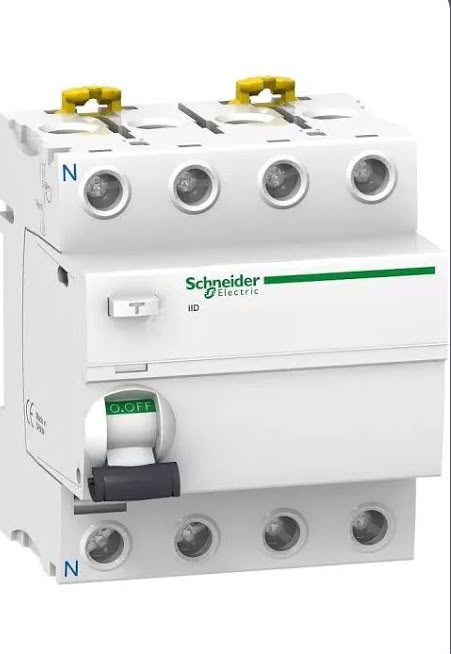
If you are planning a new distribution board or upgrading an old one, you will see three abbreviations again and again: MCB, RCCB and RCBO. They all sit on the same DIN rail and can look similar, but they protect against different faults. Choosing the right mix makes an installation both safer and easier to maintain.
MCB: Miniature Circuit Breaker
An MCB protects a circuit against overcurrent. That covers two situations: overload, where too much current flows for too long (for example, too many appliances on one circuit), and short circuit, where current suddenly rises to a very high level. When either happens, the MCB trips and disconnects the circuit.
MCBs are rated by current (6A, 10A, 16A, 20A, 32A, 63A and so on) and by trip curve. B-curve breakers trip quickly and suit general lighting and sockets. C-curve breakers tolerate higher inrush current and suit motors, air conditioners and fluorescent lighting. D-curve breakers are for heavy inrush loads such as large motors and transformers.
What an MCB does not do is protect against earth leakage. A small leakage current through a person can be fatal and still be far too small to trip an MCB.
RCCB: Residual Current Circuit Breaker
An RCCB compares the current flowing out on the live conductor with the current returning on the neutral. If some current is leaking to earth, for example through damaged insulation or through a person, the two no longer match and the RCCB trips. Common sensitivities are 30mA for personal protection and 100mA or 300mA for fire protection.
An RCCB does not protect against overload or short circuit on its own. It must be used together with MCBs, or with a main breaker upstream.
RCBO: Residual Current Breaker with Overcurrent protection
An RCBO combines both functions in one device: overcurrent protection like an MCB and earth leakage protection like an RCCB. Because each RCBO protects a single circuit, an earth fault on one circuit only switches off that circuit, not the whole board.
Which should you use?
- MCB on every final circuit for overload and short-circuit protection.
- RCCB protecting a group of MCBs when you want earth leakage protection at lower cost.
- RCBO on individual circuits where you want a fault on one circuit not to affect others, such as kitchens, bathrooms and outdoor sockets.
Many installations use a combination: a main switch or isolator, one or more RCCBs protecting groups of circuits, and MCBs on each circuit. Always follow the advice of a qualified electrician and the applicable wiring regulations for your building.
Getting the right parts
We supply original Schneider Electric Acti9 and Easy9 MCBs, Acti9 iID RCCBs and isolators from Utako, Abuja. Visit our circuit breakers page or send us your list on WhatsApp for a quote.